The Art of the Outfit Edit (Take One Thing Off, Add One Thing Back)
The difference between a good outfit and a finished one is almost never something you added — it is something you took away, and the one thing you put back in its place. Editing is the whole craft. Here is why editing beats adding, how to edit an outfit, and how to finish it.
Why Editing Beats Adding
The subtractive instinct: the the-more-is-rarely-better (the more pieces rarely making an outfit better from the signature-style logic — the more-is-rarely-better), the the-editing-creates-focus (the removing a piece letting the good ones speak from the signature-style logic — the editing-creates-focus), the the-one-focal-point (the an outfit needing one clear focal point, not four from the make-basics-expensive logic — the one-focal-point), the the-competing-pieces-cancel-out (the too many statement pieces cancelling each other out from the make-basics-expensive logic — the competing-cancels), the the-restraint-reads-as-confidence (the restraint reading as confidence, not caution from the signature-style logic — the restraint-is-confidence), and the reframe (the outfit edit as subtractive craft — the difference between a good outfit and a finished one is almost never what you added, but what you took away).

How to Edit an Outfit
The editing method: the the-look-in-the-mirror-properly (the a proper full-length look before you leave from the signature-style logic — the look-properly), the the-identify-the-hero (the identifying the one piece the outfit is about from the make-basics-expensive logic — the identify-the-hero), the the-remove-what-competes (the removing whatever competes with the hero from the make-basics-expensive logic — the remove-competition), the the-take-one-thing-off (the the classic rule of removing one accessory from the signature-style logic — the take-one-off), the the-check-the-proportions (the checking the proportions after the removal from the signature-style logic — the check-proportions), the the-add-one-thing-back (the adding one considered piece back if it needs it from the signature-style logic — the add-one-back), the the-check-the-shoes-last (the checking the shoes finish the outfit from the signature-style logic — the shoes-last), and the the-trust-the-first-instinct (the trusting your instinct about what feels excessive from the signature-style logic — the trust-instinct).
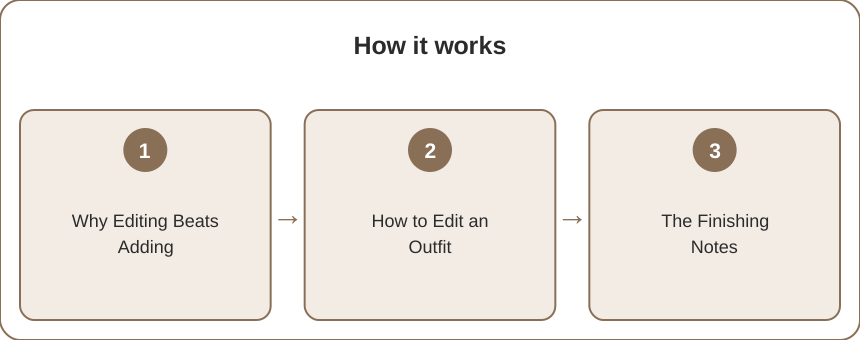
The Finishing Notes
The last five percent: the the-fit-over-everything (the fit doing more than any addition could from the make-basics-expensive logic — the fit-over-everything), the the-tuck-cuff-and-adjust (the a tuck, a cuff or a sleeve push finishing the line from the make-basics-expensive logic — the tuck-and-cuff), the the-one-considered-accessory (the one considered accessory over several from the signature-style logic — the one-accessory), the the-check-the-silhouette (the checking the overall silhouette reads cleanly from the signature-style logic — the check-silhouette), the the-colour-cohesion (the the colours cohering rather than clashing from the color-pairings logic — the colour-cohesion), the the-comfort-in-what-you-wear (the wearing what lets you move and feel yourself from the signature-style logic — the comfort-and-confidence), and the frame (the outfit edit as identifying the hero, removing what competes and adding one considered piece back — with fit, a tuck and one accessory finishing it — take one thing off, add one thing back. Identify the hero piece, remove what competes with it, check the proportions, and let fit and one accessory finish the job).
The difference between a good outfit and a finished one is almost never something you added — it is something you took away, and the one thing you put back in its place. Editing beats adding because more is rarely better, editing creates focus, an outfit needs one focal point, competing pieces cancel out, and restraint reads as confidence. Edit an outfit by looking in the mirror properly, identifying the hero, removing what competes, taking one thing off, checking the proportions, adding one thing back, checking the shoes last, and trusting your first instinct. Finish it with fit over everything, a tuck or cuff, one considered accessory, checking the silhouette, colour cohesion, and comfort in what you wear. Take one thing off, add one thing back.
Keep Reading
This article is for general styling and informational purposes only. Trends, sizing, availability and pricing may vary by brand and season.